
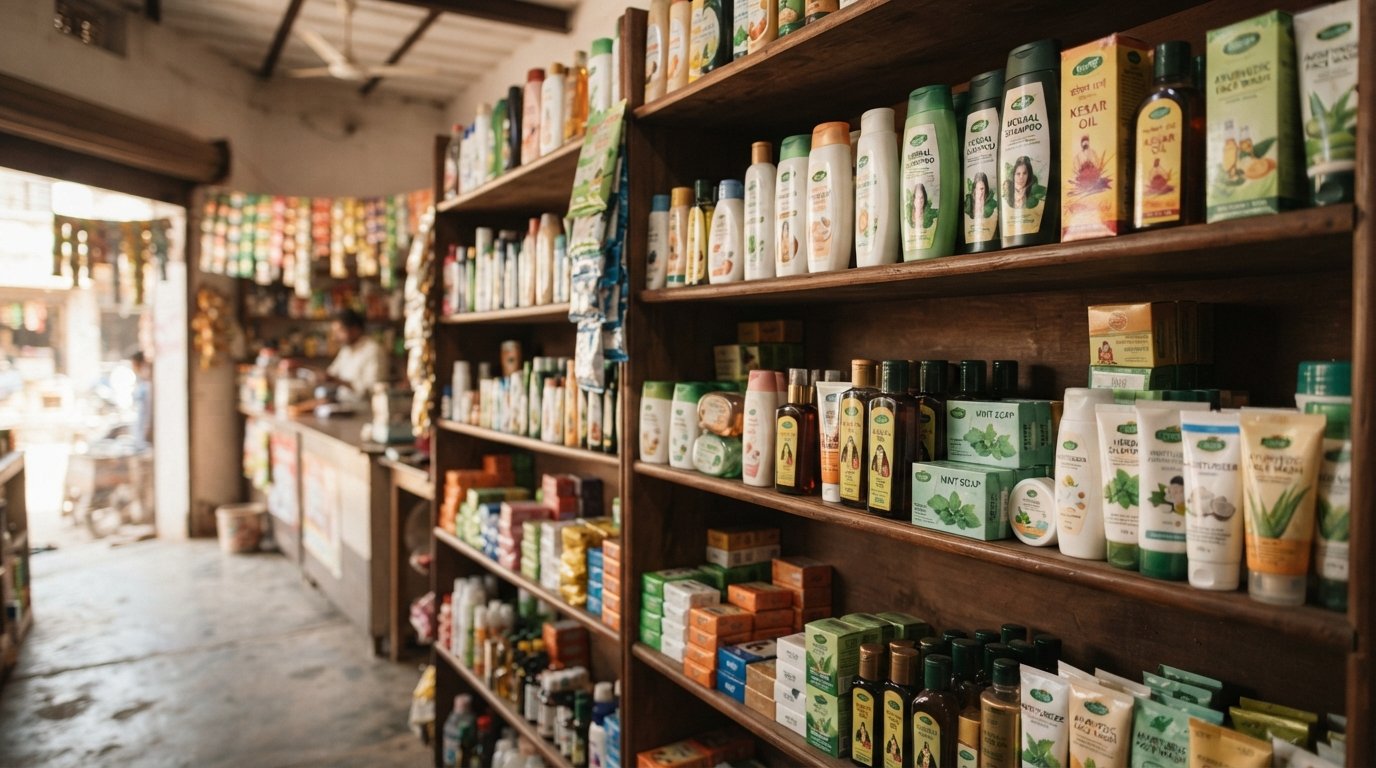
When the boardroom talk shifts to rural market recovery, it is usually a mix of cautious optimism and hopeful spreadsheets. Harsha V Agarwal, Vice Chairman and MD at Emami, recently laid out a roadmap that suggests the company is betting big on the consumption story in India’s heartland. While the FMCG sector has spent the last few quarters biting its nails over inflation and tepid demand, the narrative coming out of Emami is one of deliberate structural positioning. They aren’t just waiting for the monsoon to fix the math; they are actively retooling their distribution and product mix to catch the wave before the rest of the market fully wakes up.
For those watching the FMCG space closely, the focus on rural India is nothing new. Every legacy giant claims to be ‘going deep’ into tier-three and tier-four towns. What makes Emami’s current stance interesting is the interplay between volume growth and the push for premium products. Typically, rural consumers are seen as price-sensitive entities who prioritize value over bells and whistles. However, the data suggests a shift. The ‘mass-premium’ segment is growing, and rural shoppers are increasingly showing a willingness to trade up for products that offer better functional benefits, even if the per-unit cost is higher. Emami is leaning into this by emphasizing their core personal care portfolio, which has historically held strong brand equity across various demographics.
Let’s talk strategy. The company has been putting in the groundwork to optimize its supply chain efficiency. When demand is volatile, the last thing you want is a bloated inventory sitting in regional warehouses while the retail shelves run dry. By tightening the feedback loop between urban hubs and rural distributors, Emami aims to ensure that when the rural market recovery finally hits its stride, their products aren’t just available—they are prominent. This isn’t just about stocking soaps or balms; it is about data-driven replenishment that reduces the cost of serving remote geographies.
Critics might point out that rural sentiment is highly susceptible to external shocks like erratic rainfall or food inflation. If the household budget is squeezed by rising prices for pulses or vegetables, the first thing to go is discretionary spending on personal care items. Yet, Goenka and Agarwal seem to be banking on a ‘stickiness’ factor. Their products in the pain management and hair care categories are often viewed as essential rather than discretionary. This provides a defensive buffer that many other FMCG players don’t enjoy. If you are a brand that solves a daily physical annoyance, your consumer is less likely to switch to a cheaper, unbranded alternative simply because their wallet is feeling a bit thin.
Furthermore, the premiumisation trend is a double-edged sword. To make it work, you need more than just a shiny new package or a fancy marketing campaign. You need a distribution network that can actually support a premium product, meaning retailers who are educated on why a customer should pay 20% more for a specific variant. Emami’s approach involves training their sales force to be more than just order takers. They are positioning these staff as advisors who help rural kirana store owners optimize their shelf space. It is a slow, tedious process, but it is far more defensible than throwing money at digital ads that don’t reach the average rural consumer in a meaningful way.
As we look toward the next fiscal, the test will be in the execution. Can they scale their premium offerings without alienating their mass-market base? Managing that balance is the tightrope walk of the decade for Indian FMCG leaders. Many have fallen off by trying to do too much too soon, or by underestimating the sheer logistical complexity of the Indian rural landscape. Emami’s strategy seems to be one of calculated incrementalism. They are not trying to reinvent the wheel; they are just ensuring their existing wheels are greased and moving in the right direction. For investors and marketing observers alike, the next few quarters will prove whether this rural strategy delivers the margin expansion they are promising, or if it remains a optimistic projection in a very competitive field. At the end of the day, execution is the only thing that separates a well-crafted press release from a successful bottom-line performance.