
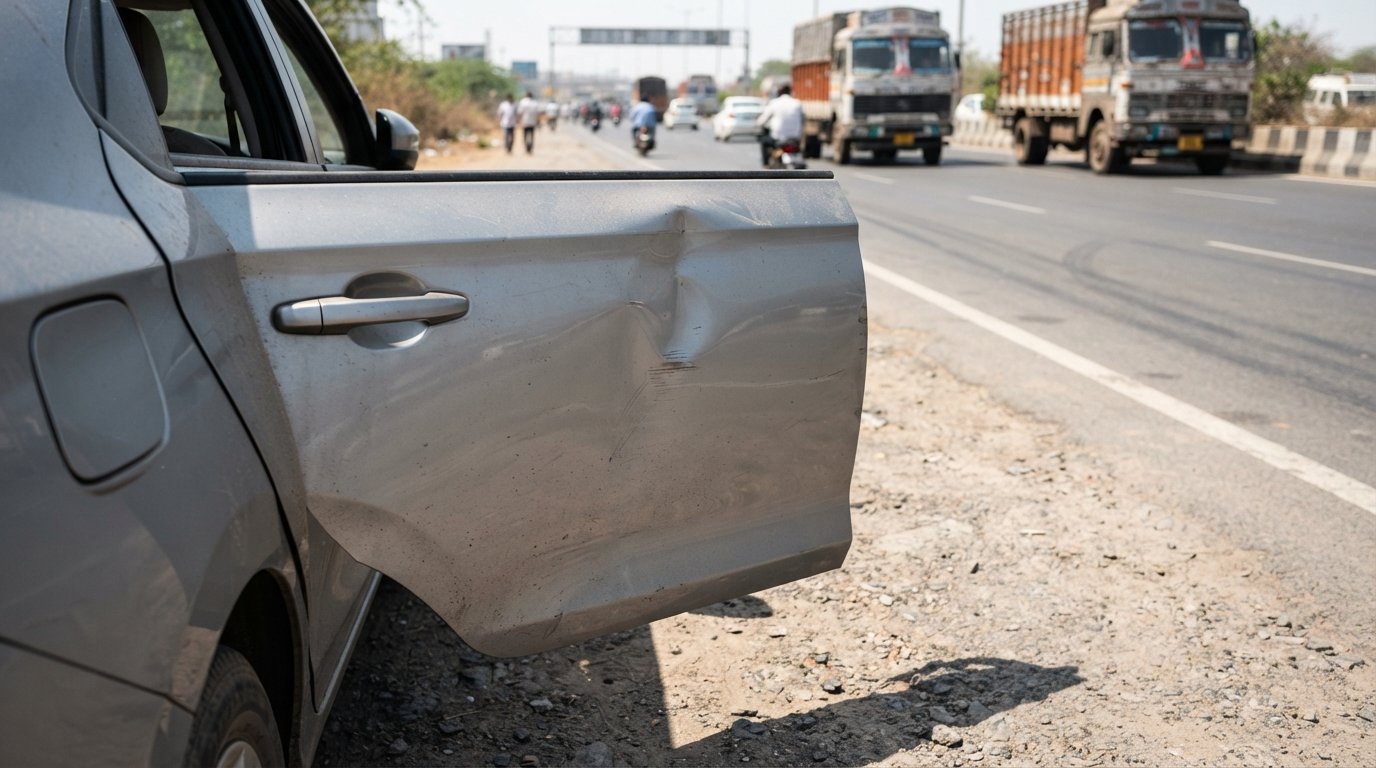
When news broke that The Great Khali was involved in a highway incident near Panipat, the digital reaction was almost instantaneous. Within minutes, social media was flooded with speculation, fan concern, and that specific brand of viral panic that defines our current media landscape. Yet, the story didn’t spiral into a PR nightmare or a tragic narrative. Instead, it became a quiet case study in how a personal brand manages a potential crisis with total indifference. The Great Khali car accident, which could have easily dominated headlines for all the wrong reasons, was neutralized by the man himself in a single, dismissive stroke.
For those of us tracking influencer behavior and celebrity brand management, this moment offers a fascinating pivot from the usual playbook. Most public figures in India, when faced with a high-profile vehicle incident, immediately pivot to long-form clarifications, police statements, or emotional video appeals to maintain their aura of vulnerability or accountability. Not him. By characterizing the event as ‘no big deal,’ he effectively stripped the narrative of its weight. He didn’t just downplay the event; he made the media cycle around it look slightly ridiculous.
There is a lesson here for the modern influencer economy. We often coach brands and personalities to be hyper-reactive, believing that silence is a vacuum that will inevitably be filled by negativity. We obsess over sentiment analysis and rapid response times. But this episode reminds us that brand authority is often defined by what you choose not to amplify. In the world of extreme sports and reality television, size—both physical and metaphorical—is your primary asset. By dismissing the accident, he maintained the ‘invincible’ persona that has been his primary hook for decades, ensuring that the audience’s memory of the day isn’t ‘car wreck,’ but rather ‘Khali is too tough for a car wreck.’
From a marketing standpoint, it is refreshing to see a departure from the polished, agency-approved apology videos that have become a stale staple of Indian celebrity culture. These scripted moments often feel more like a forced transaction with the audience than a genuine interaction. Here, the lack of effort was the strategy. It suggests that if your brand is built on a foundation of raw strength and a specific, niche identity, you don’t need to perform contrition or vulnerability to keep your base engaged. You just need to show up and be exactly who they expect you to be.
However, we should remain somewhat skeptical of this approach in the broader industry. While it worked for a titan of the wrestling world, this ‘zero-urgency’ model is dangerous for corporate brands or smaller influencers. If a mid-tier brand were to have a similar incident and adopt this laissez-faire attitude toward consumer concerns, it would likely be viewed as arrogance rather than stoicism. The luxury of ‘not caring’ is something you earn through years of building a monolithic public persona. For the rest of the market, this is a reminder that perception is a fragile asset. We spend thousands of hours and millions of rupees on crisis communication strategies, only to be reminded that sometimes, the best strategy is simply being the loudest voice in the room—or the most indifferent one.
As digital marketers, we often treat every headline as a crisis to be managed. We see a spike in searches and immediately start drafting press releases. But looking at how The Great Khali navigated this, we might want to reconsider our obsession with constant control. Sometimes, the public doesn’t want an elaborate explanation. They want the truth, delivered with the kind of blunt, no-nonsense confidence that cuts through the digital noise. He didn’t need a team of PR professionals to spin the story; he simply stated his reality, and the cycle moved on. It is a bold, albeit risky, way to operate, but it highlights a massive gap in how we communicate: we over-calculate, while the most effective influencers are often the ones who just speak their mind, consequences be damned.
Ultimately, this isn’t just about a wrestler and his vehicle; it’s about the erosion of the ‘professional’ wall between talent and the public. As we move forward, brands should look at these moments not as disasters, but as tests of brand equity. If a simple statement like ‘it’s no big deal’ can effectively kill a trending topic, perhaps we are over-engineering our corporate communications in an age where authenticity, however blunt, is the only currency that truly trades at a premium. It’s a messy, unpredictable, and frankly, hilarious way to run a brand, but it works.