
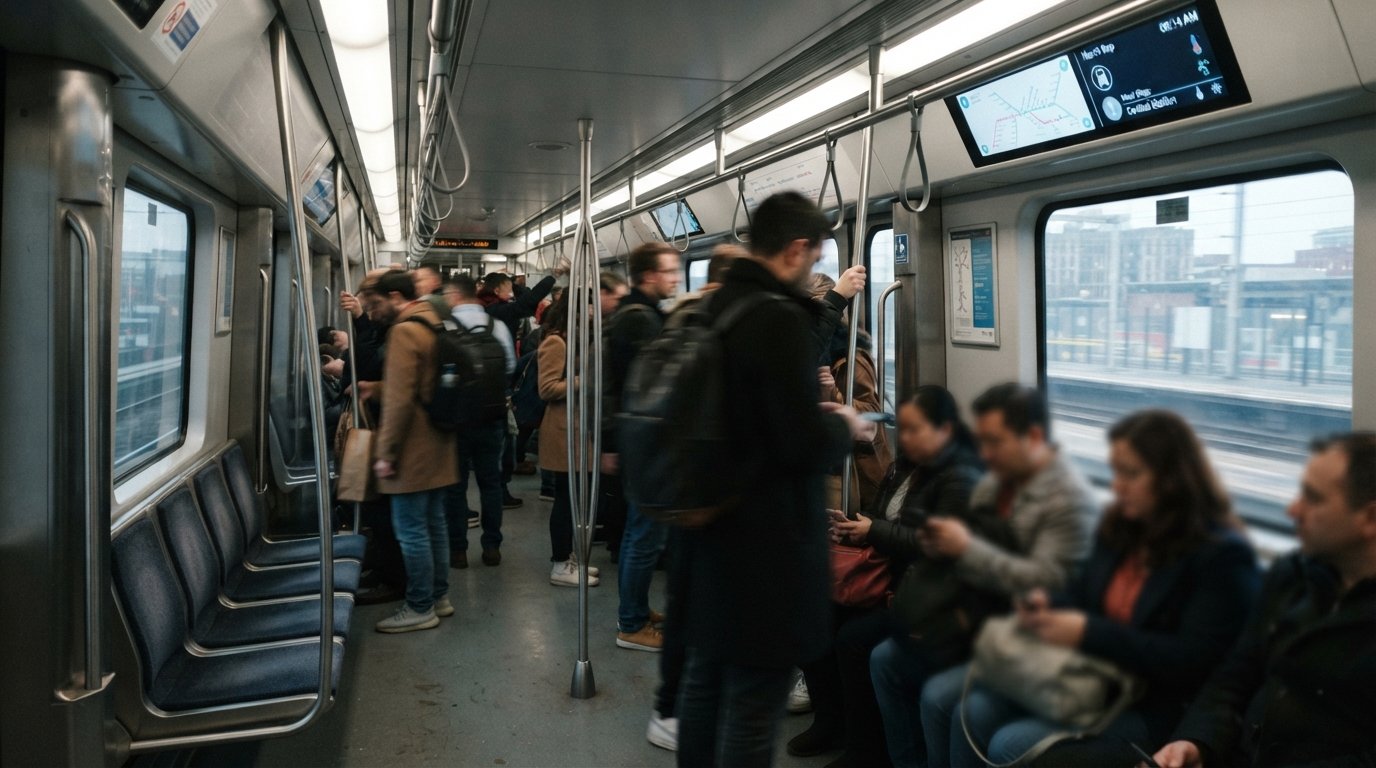
When a legendary former Indian fast bowler is spotted navigating the Bengaluru Metro with nothing but a backpack and a trolley bag, the internet stops to take notice because Javagal Srinath simplicity stands out like a neon sign in a world of manufactured vanity. We live in an era where celebrity personal brands are carefully curated by teams of PR consultants, stylists, and social media managers who obsess over every pixel of an Instagram story. In that noise, a candid, low-resolution photo of a cricketing icon taking public transport doesn’t just go viral; it cuts through the clutter of forced luxury and artificial relatability that defines modern influencer culture.
Brands today spend millions trying to buy authenticity. They hire celebrities to hold their products in staged environments, hoping that a sliver of that star’s credibility will rub off on their bottom line. Yet, here is a man who didn’t spend a single rupee on a campaign, yet achieved the kind of organic reach that any CMO would kill for. It forces us to ask why we find this so refreshing. The answer is simple: we are starving for genuine human behavior. Consumers have developed a sophisticated radar for anything that feels scripted or performative. When we see a public figure acting like an ordinary citizen without an entourage, the perceived distance between the brand (in this case, the person) and the audience vanishes entirely.
There is a lesson here for every marketing professional tasked with building a personality-led brand. Influence is no longer about flaunting success; it is about showing comfort with your own skin. For years, the marketing playbook dictated that the bigger the star, the more inaccessible they had to appear. Private jets, security detail, and velvet ropes were the standard symbols of success. But the tide has shifted toward the relatable icon. When a massive household name chooses the metro over a luxury car, they are signaling a level of confidence that money simply cannot buy. It is the ultimate flex of ‘I don’t need to perform for you to know who I am.’
Marketing teams often fear that if their ambassadors don’t project a high-flying lifestyle, they lose their aspiration value. This is a fundamental misunderstanding of the modern Indian consumer. Today’s buyer, especially the Gen Z and Millennial cohort, values transparency over polish. They are tired of the filters. By embodying Javagal Srinath simplicity, a person becomes an outlier, not because they are doing something extraordinary, but because they are refusing to participate in the charade of elite performance. This specific incident in Bengaluru highlights that the most powerful marketing happens when there is zero intent to market anything at all.
Consider the contrast between this moment and the typical celebrity endorsement deal. In an ad, the celebrity is wearing a tailored suit, standing in a studio with perfect lighting, telling you that a particular product is the reason for their success. It feels transactional. It feels cold. In contrast, the image of a legend riding the train connects on a subconscious level because it is rooted in reality. It suggests a lack of ego that resonates deeply with an audience that is constantly being sold the ‘perfect life.’ This isn’t just a feel-good story; it is a case study in effective communication.
If you are managing talent or building a personal brand, take notes. You do not need a fancy launch event or an expensive viral video production to capture the hearts of millions. Sometimes, the most powerful thing you can do is just exist in the same space as your audience. This incident proves that stripping away the layers of artificial prestige is the fastest way to become memorable. It’s time for brands to stop chasing the glitz and start embracing the quiet, grounded power of living authentically. In the long run, people don’t buy the persona; they buy the person. And when the person is as real as it gets, the marketing takes care of itself.